Enhancing PySlint with TOML Configurability: Insights from OSDA 2024


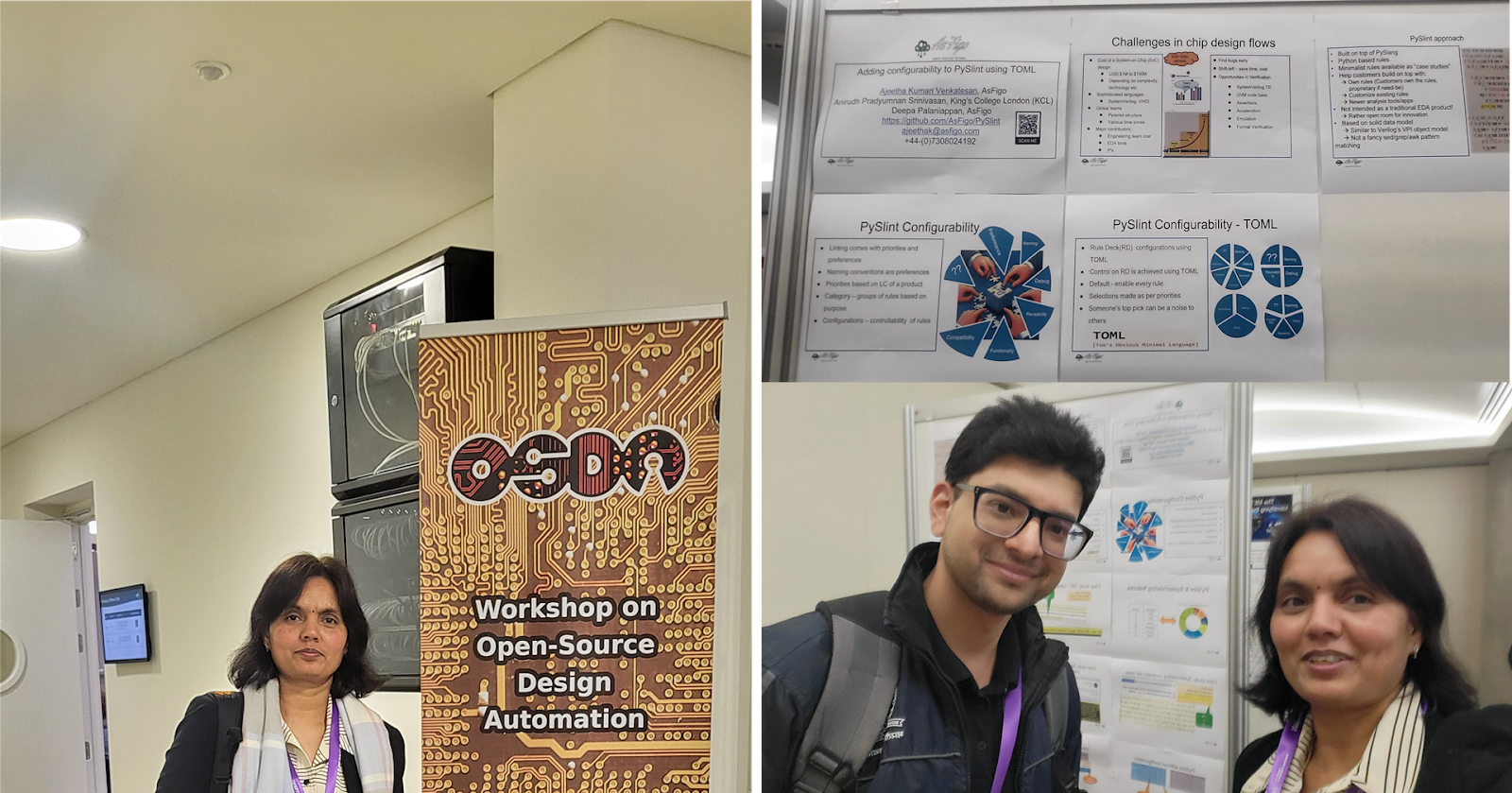
This poster delved into the technical details and practical implications of integrating TOML (Tom's Obvious Minimal Language) into PySlint, a burgeoning SystemVerilog linter based on the open-source PySlang parser.
The Need for Configurability in Linters
Linting tools play a crucial role in maintaining code quality by enforcing coding standards and detecting potential issues early in the development process. SystemVerilog, a widely used language in ASIC and FPGA designs, often presents multiple ways to achieve the same functionality, making the role of linters even more significant. Customizability in these tools allows development teams to tailor linting rules to their specific coding styles and project requirements, enhancing both code consistency and functionality.
PySlint: Leveraging Open-Source for SystemVerilog Linting
PySlint is designed to leverage the capabilities of the open-source PySlang parser, providing a flexible and powerful linter for SystemVerilog. By allowing users to define custom linting rules via a Python API, PySlint facilitates a high degree of customization. However, as the tool gained traction, the need for an intuitive and structured configuration method became apparent.
Integrating TOML for Enhanced Configurability
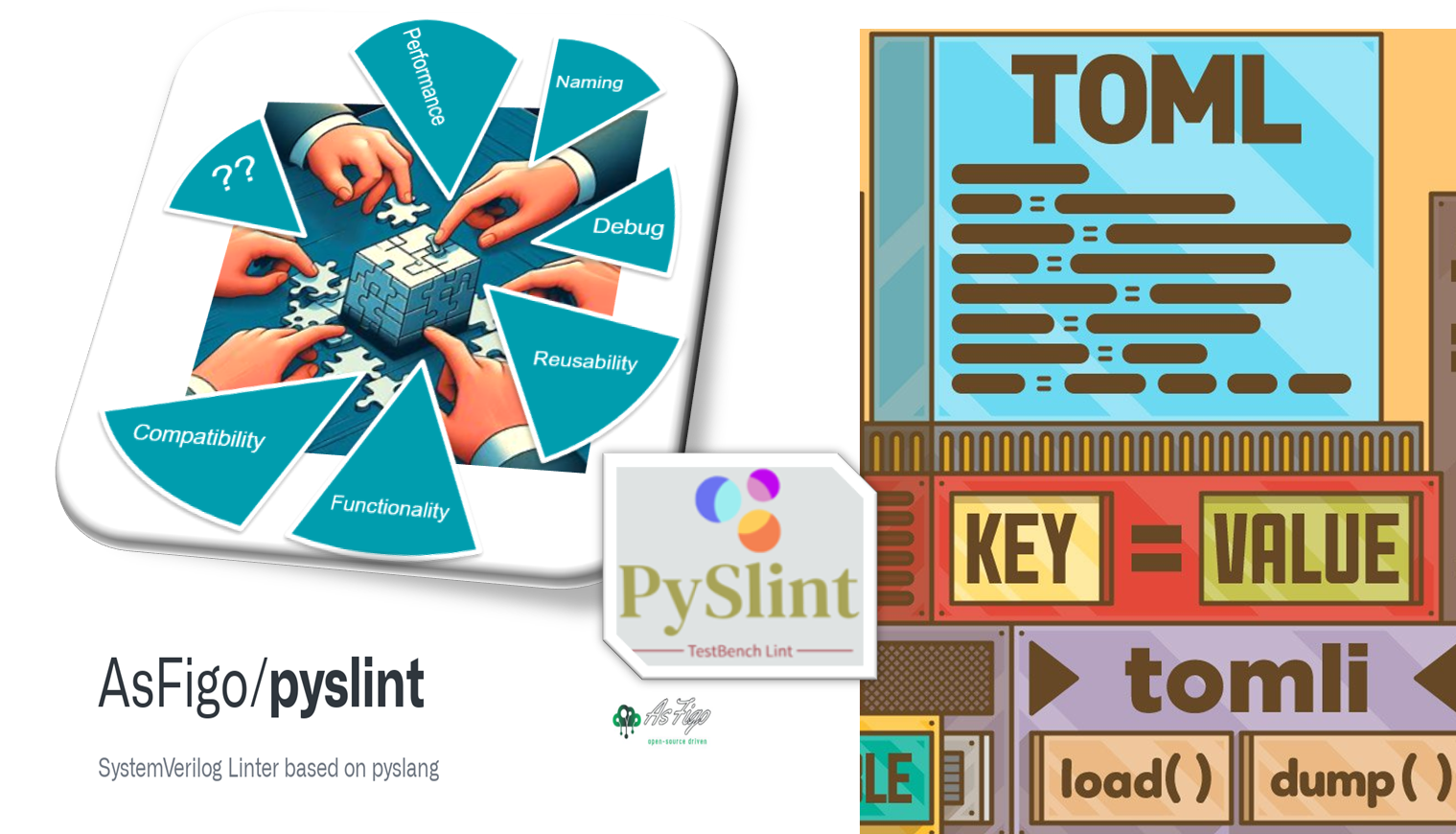
TOML, known for its simplicity and readability, emerged as an ideal choice for configuring PySlint. The integration of TOML into PySlint enables users to easily define and manage linting rules and settings in a straightforward, human-readable format. This approach not only simplifies the configuration process but also enhances the overall usability of PySlint.
The poster presented at OSDA 2024 outlined the following key points:
- Configurability Features: Detailed how TOML can be used to enable/disable various linting rules and configurations, making it easier for users to adapt PySlint to their specific needs.
- Implementation Details: Discussed the technical aspects of integrating TOML with PySlint, including challenges faced and solutions implemented.
- User Case Studies: Highlighted early use cases from industry projects such as the tinyODIN spiking neural network processor and OpenTitan IPs. These case studies demonstrated the practical benefits of TOML-based configurations in real-world scenarios, showcasing improvements in code consistency and reduced risk of functional errors and race conditions.
Conclusion and Future Prospects
The addition of TOML configurability to PySlint marks a significant step forward in the tool's development, making it more accessible and useful for a broader range of users. AsFigo's presentation at OSDA 2024 not only underscored the importance of customizable linting tools but also set the stage for further innovations in open-source design automation.
For more technical details and to explore PySlint, you can visit the PySlint GitHub repository and the OSDA official website.

The article provides a useful look at how configurability can improve a SystemVerilog linting tool, particularly through the integration of TOML into PySlint. The discussion of custom linting rules is important because different ASIC and FPGA development teams may follow different coding standards, making configurable analysis valuable for maintaining consistency while detecting potential issues early.
ReplyDeleteThe explanation of PySlint's use of the open-source PySlang parser also shows how Python can be used to build specialized development tools. For readers who want to strengthen their Python programming foundation before working with tools such as parsers, APIs, and configurable automation utilities, a Python Online Course can provide a useful starting point.
The move from Python API-based configuration toward a structured TOML configuration approach is particularly interesting because it can make customization easier to manage as a project grows. Learning through a Python Online Training program can also help developers build the programming skills needed to work with configuration-driven tools and automation workflows.
ReplyDelete